A new leak has surfaced online, claiming to bring us another look at this upcoming Samsung smartphone. The leak includes various official-looking renders of the Galaxy M11 as well as the alleged...
from NDTV Gadgets - Latest https://ift.tt/2UGPss5
Saturday, March 28, 2020

Top 10 best selling cars in February 2020
Amidst the global economy facing some difficult times due to the outbreak of the coronavirus pandemic, the tabulation for the best-performing cars in February in India is out.
The Top 10 list for last month has a lot going on with a near-equal spread between market leader Maruti Suzuki and a tough fight between arch-rivals from Korea’s Hyundai Motor Corporation – Hyundai Motor India and Kia Motors India. While the list is usually dominated by models from Maruti Suzuki, this time it’s the Kia Seltos and Hyundai Venue that have displaced erstwhile segment champions, the Hyundai Creta and the Vitara Brezza, respectively. Can the Korean duo play even stronger in the coming times?
Let’s have a closer look at the chart in comparison to February 2019:
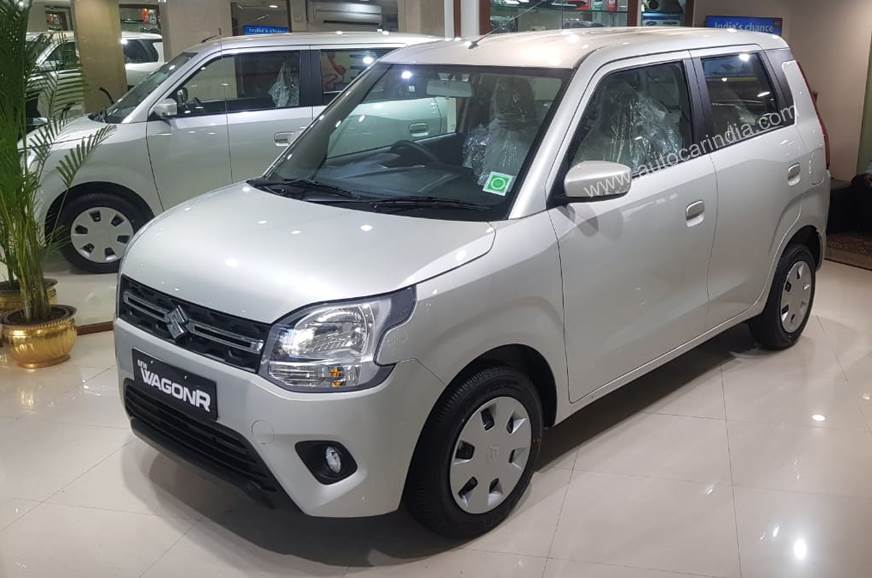
At the No. 1 spot, the Maruti Swift emerged as the top-selling car in the country, with sales tallying 18,696 units (February 2019: 18,224 / +2.58 percent) last month. The popular hatchback gained one spot from last year, followed by the new Wagon R which went home to 18,235 buyers (15,661 / +16.43 percent) and recorded a notable jump of three positions.
The cheapest Maruti on offer, the Maruti Alto dropped two places to No. 3 to register sales of 17,921 units (24,751 / - 27.59) while its bigger sibling Maruti Baleno slid one place to No.4 to sell 16,585 units (17,944 / -7.57). The Baleno also crossed the 7 lakh-unit sales milestone in January, and considering its February numbers, its overall volumes stand at 7,37,318 units, with 6,33,452 units of petrol and 1,03,866 units of diesel. The Baleno was introduced a little over 5 years ago and is retailed only from Nexa showrooms across 200 locations in India. It became the first premium hatchback to surpass this milestone.
At No. 5, the Kia Seltos entered the sales chart and displaced the segment king and cousin Hyundai Creta. The Seltos went home to 14,024 buyers in the month and, since its launch in August 2019, has clocked cumulative sales of 74,700 units. Its February sales have become the second-best so far, with January numbers at 15,000 units being the highest. Now, as it dethrones the Creta, which clocked 10,206 units in February 2019, the Seltos will again need to face some in-house competition as Hyundai has introduced the next-generation Creta with a similar variant-heavy and aggressive pricing strategy.
The Maruti Ertiga MPV secured the No. 6 spot with 11,782 units, its best performance in the first 11 months of this year, and the Eeco van made it to No. 7 position with sales of 11,782 units.
On the other hand, while Hyundai’s Grand i10 gained one place to be at No. 8 position with sales of 10,407 units (9,065 / +14.80 percent), the Venue replaced Maruti’s Vitara Brezza altogether and went home to 10,321 buyers in the month. The Brezza, which had already started slowing down due to the company’s announcement of making an exit from diesel, was launched in a petrol-only avatar last month. It will be interesting to see the new fight between the two compact crossovers once BS6 is implemented.
Closing the tally is the Maruti S-Presso, which went on to sell 9,578 units in the month. The S-Presso was launched in September 2019 as an entry-level hatchback above the Maruti Alto, and has been enticing buyers with its practicality, peppy performance and fuel efficiency. The car comes with an AMT option too.
While February saw a lot of shuffling of places among crucial brands in the market, March, from the looks of it, could be troublesome with India having imposed a lockdown from March 25 for the next three weeks at least, in order to curb the spread of COVID-19. There are already reports of spiralling losses that the automotive industry will face and on the catastrophe a non-extension of the deadline to exhaust BS4 stock could be.
It’s a tough time for the industry, and all stakeholders will have to stay strong and bonded to fight for better times.

Also see:
How coronavirus has hit the global auto industry: a timeline
from Autocar India - Cars https://ift.tt/2JsuQON
One-off McLaren Elva M6A Theme roadster unveiled
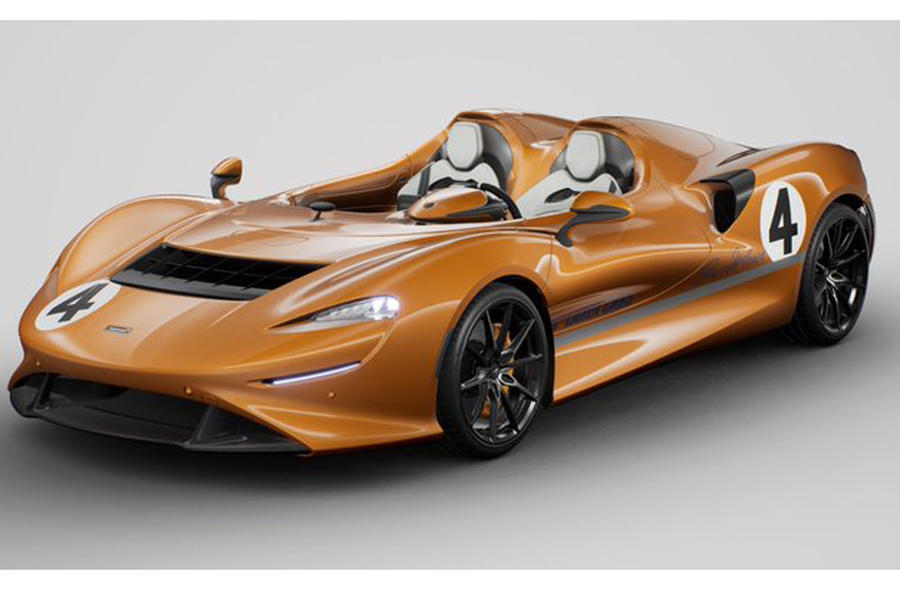
MSO (McLaren Special Operations), McLaren’s in-house personalisation division, has created a special edition of the new Elva roadster that pays homage to one of the firm’s historic race cars.
Finished in a distinctive shade of ‘Anniversary Orange’, the Elva M6A Theme by MSO has been created in tribute to company founder Bruce McLaren’s iconic M6A, with which he won the 1967 Can-Am Challenge Cup.
The one-off special edition's motorsport-inspired livery incorporates a subtle grey racing stripe along the sides, a retro-inspired ‘McLaren Cars’ logo and Bruce McLaren’s signature. The prominent '4' decal is a reference to the Kiwi’s long-standing race number.
The theme is carried over to the interior, where the dashboard, centre console and door panels are painted in the same shade of orange. The brake calipers, also finished in orange, sit behind new 10-spoke alloy wheels, painted in black.
Whereas the original car was powered by a naturally aspirated Chevrolet-derived 5.9-litre V8, today’s road-legal car packs McLaren’s range-topping 4.0-litre twin-turbo V8. The new MSO edition is mechanically unaltered from the standard version, meaning it produces 815hp and can crack the 0-100kph sprint in less than 3sec.
McLaren will build just 399 examples of the Ferrari SP2-rivalling Elva, with customer deliveries set to get under way later this year once the Speedtail’s production allocation has been fulfilled. Prices start from £1,425,000, (around Rs 13 crore) including UK VAT.
Recently, the British carmaker also revealed the track-focused, limited-run 765LT supercar.
from Autocar India - Cars https://ift.tt/2UowPu0
Realme 6i in for review

Realme 6i didn't get to participate in the launch eventof the Realme 6 and Realme 6 Pro, but that has more to do with strategy than with its shortcomings as a phone. In India, where the event was held, the 6i will be called Realme Narzo 10 and will get its own announcement, once the COVID-19 lockdown is over. As luck would have it we got unit and as is the norm we will share some early impressions before we begin work on the full review. The Realme 6i's predecessor - Realme 5i - is just three months old, but the rate at which Realme is evolving means we are still getting plenty of...
from GSMArena.com - Latest articles https://ift.tt/39pPTMJ
Mi 10 Pro vs Mi 10 vs Mi 10 Lite
In this article, we take a look at how the Mi 10, Mi 10 Pro, and Mi 10 Lite stack up against each other in terms of price and specifications. Xiaomi on Friday had unveiled the Mi 10-series smartphones...
from NDTV Gadgets - Latest https://ift.tt/2WXmp6p
from NDTV Gadgets - Latest https://ift.tt/2WXmp6p
Coronavirus Pandemic: Mahindra To Manufacture Face Shield From March 30
The company will kick start production at its Kandivali facility from March 30, 2020 and will manufacture 500 units to begin with and then look to ramp up production.
from NDTV Auto - Latest https://ift.tt/2Ur1gji
from NDTV Auto - Latest https://ift.tt/2Ur1gji
New Delhi air quality improves in lockdown
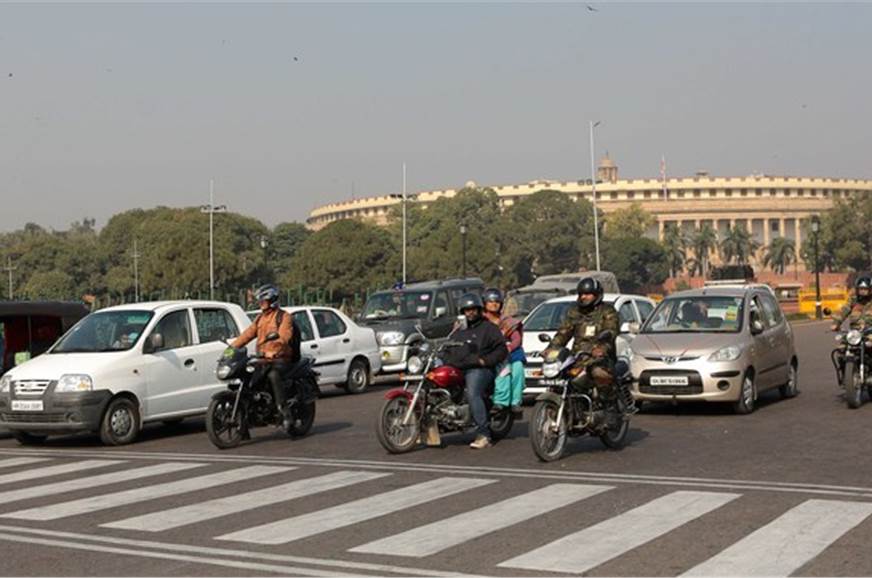
As India observes its second day of a 21-day nationwide lockdown – a proactive attempt by the government to curb the spread of the coronavirus – there’s a glimmer of hope in the skies. The Air Quality Index (AQI) of the country, which ranked as the fifth most polluted country in the world in the 2019 World Air Quality Report, published by Switzerland's IQAir, is in for some positive change driven by lack of vehicular emissions and industrial operations.
With a prevailing AQI of 71, New Delhi, the national capital has recorded a sharp 60 percent drop in the PM 2.5 (particulate matter) concentration in its air over the past one week, leading to the city currently ranking at No. 31 among popular metropolitans around the world, as of March 26, as listed by IQAir.
Compare this much-improved position to last year's report when New Delhi was placed at the No. 5 position in Top 30 list of most polluted cities in the world. It would not come as any surprise that 21 of these 30 polluted cities are in India.
The national capital, which started seeing state government measures such as closure of malls and cinema halls as early as March 13, to then getting into a complete lockdown since March 22, has brought in this effective transformation.
Air pollution has been a vexing subject for much too long, especially in recent times when climate change and global warming have caught the attention of policy makers as well as industry leaders worldwide, who now look at all possible sustainability solutions to go eco-friendly.
According to IQAir's report, the average level of PM 2.5, which is majorly contributed by combustion from power plants, smoke and soot from waste burning, industrial chemical processes and vehicular emissions, exceeded the WHO-recommended guidelines by a shocking 500 percent in India last year.
The total lockdown could bring some essential respite to the environment by providing it time to rejuvenate in the absence of major economic activities, which also includes suspension of domestic and international air transportation, and all national train services in the country until midnight of April 14.
55 percent PM 2.5 typically comes from CV fleets
However, even as all major modes of transportation, including local trains, buses, auto-rickshaws, shared cabs and private transportation, are prohibited from plying on city roads during the lockdown, goods-carrying commercial trucks are still running to keep the production and delivery of essential goods and services active.
According to Paulo Afonso ade Andre, AQI expert, Air Pollution Lab - Medical School, University of Sao Paulo, Brazil, "Heavy commercial trucks and buses are responsible for 55-60 percent of the PM2.5."
Historical data shows that New Delhi had 1.12 crore registered vehicles in the city, as of December 2018, with a growth rate of about 6 percent.
India's automotive hubs go greener
Meanwhile, the Indian automotive industry, which includes vehicle OEMs, component suppliers, dealers and logistics players, have also been significantly impacted by the ongoing lockdown and have had to pull down shutters to participate in the national call for prioritising health of its citizens. A quick glance at the PM2.5 readings of the corresponding automotive hubs in the country also shows a noticeable improvement in the prevailing condition of the air.
Manesar, which is an industrial area on the outskirts of Delhi housing vendors supplying to neighbouring plants of Maruti Suzuki India, Hero MotoCorp and Honda Motorcycle & Scooter India, has recorded a 70 percent improvement in air quality, with the AQI going down from 154 on March 19 to 47 as of 14:00 hours March 26.
For Gurgaon, there has been a 67 percent improvement, with the metric dropping from 232 to 75. Nashik in Maharashtra, which is predominantly known for Mahindra & Mahindra's operations, has posted a nominal 6 percent improvement from 66 to 62.
Chennai, which is home to Ford India, Hyundai Motor India, BMW India, Renault-Nissan Alliance India, TVS Motor Company and Royal Enfield, shows a 32 percent reduction in the AQI value, which has dropped from 88 a week ago to 60 on March 26 afternoon.
BS6 to reduce PM 2.5 emissions
With less than a week remaining for the country to make a complete transition to the BS6 emission norms for its new vehicles, India could continue to be on the path of decreased vehicular emissions from its fleet.
The new stringent regulations, which get implemented nationwide from April 1, will reduce NOx emissions by 25 percent in petrol-powered vehicles and bring a 68 percent reduction of the same in diesel vehicles, alongside a drastic 82 percent reduction in PM2.5.
While the industry has been bracing itself for the much-discussed transition, the current coronavirus situation has impacted its plan of action. To provide some relief, the Supreme Court passed a judgement at a hearing held on March 27, allowing automotive retailers to only sell 10 percent of unsold BS4 inventory for 10 days post lockdown.
All AQI statistics sourced from CPCB
Also see:
21 out of the of world's 30 most polluted cities are in India
from Autocar India - Cars https://ift.tt/2UsNPiS
Subscribe to:
Posts (Atom)