Twitter restricted Donald Trump Jr.'s ability to tweet from his account for 12 hours on Tuesday, after it required him to delete a post that violated the social media site's policy on coronavirus...
from NDTV Gadgets - Latest https://ift.tt/3hJQRrv
Tuesday, July 28, 2020

CES 2021 To Go Digital; Will Be Organised In January 2021
The Consumer Technology Association (CTA) has announced that CES 2021 will take place from January 6 to January 9, 2021. All exhibitors, customers, thought leaders and media from around the globe will...
from NDTV Auto - Latest https://ift.tt/2P2otEH
from NDTV Auto - Latest https://ift.tt/2P2otEH
Next-gen BMW X1, 5 Series to get all-electric derivatives

The next-generation BMW 5 Series and X1 are set to be offered with all-electric powertrains, alongside a line-up of petrol, diesel and plug-in hybrid engine options. The move is part of BMW's ambition to introduce 25 electrified models by 2023.
Highlights
- New BMW X1 and 5 Series expected to share derivative of the iX3’s all-electric powertrain
- Will be joined by all-electric iterations of the BMW 7 Series, 3 Series, 4 Series and iNext SUV
- Company also targeting an 80 percent reduction in carbon emission per vehicle at its production facilities
What to expect from the all-electric BMW X1 and BMW 5 Series?
No further details of the electric 5 Series and X1 have been given, but both can be expected to use a variant of the single-motor powertrain featured in the newly revealed iX3, which sends 286hp to the rear wheels and offers a WLTP range of 458.6km.
The current versions of the 5 Series and X1 are already available with conventional petrol and diesel, and plug-in hybrid powertrains.
What other electric models are on the cards from BMW?
The 5 Series and X1 will join the next-generation 7 Series flagship luxury sedan in receiving full-electric versions. By the time they arrive, BMW will also have launched the iNext electric SUV, a smaller iX3 electric SUV and the i4 electric sedan. A recently spotted prototype on international roads suggests that an electric 3 Series sedan is also on the cards.
As well as introducing new electrified models, BMW will work towards reducing carbon emissions from its production sites by 80 percent per vehicle, taking it down to 10 percent of its 2006 production emissions output.
The manufacturer says it will pay more attention to “upstream added value” in order to ensure the well-to-wheel environmental impact of its EVs doesn’t cancel out improvements elsewhere. As part of this, it will analyse suppliers’ carbon footprints when awarding supply contracts and work to build “the most sustainable supply chain in the entire industry”.
BMW X1 and 5 Series in India
BMW launched the updated X1 in India earlier this year, with the facelift for the 5 Series sedan making its global debut in May 2020. The updated 5 Series sedan will arrive in India sometime in 2021. Also on the cards is the refreshed BMW 6 Series GT and the all-new 4 Series.
Also see:
BMW X7 Dark Shadow Edition revealed
BMW opens new certified, pre-owned car showroom in Bengaluru
BMW cars to get major connectivity tech update in international markets
from Autocar India - Cars https://ift.tt/30Vd53c
Nissan Arya expected to be followed by larger all-electric SUV

- All-new electric SUV will be positioned above the Ariya
- Will be based on Nissan's modular CMF-EV platform
- No word on global launch, yet
Nissan’s all-electric line-up could soon include a large SUV that will join the Leaf and the recently revealed Ariya SUV. As Nissan’s third bespoke electric model, a large SUV is a natural next step given the demand for such vehicles in China and the US, as well as the company’s role in the Renault-Nissan-Mitsubishi Alliance to lead projects involving large cars.
It’ll share its platform with the Nissan Ariya
The Ariya, which was unveiled just a fortnight ago, uses the new CMF-EV architecture – a modular platform created purely for Nissan’s electric models. As with other carmakers, such as Volkswagen and its MEB electric platform, a family of Nissan models is expected to use the architecture given the heavy investment involved.
Nissan Europe’s EV boss, Helen Perry, hinted at the large SUV, saying, “The platform will be used for other cars in the future. The C-SUV and D-SUV segments are due to grow about 300 percent over the next three years, so we will look to use the platform in growth segments in the next few years.”
It’ll have a similar range as the Nissan Ariya
An electric large SUV would offer around 500km of range, matching the Ariya’s top range figure. Perry didn’t write off future EVs offering longer ranges but said the Ariya’s 500km is an important threshold to bring consumers on board. Perry also elaborated on the reason the Ariya has switched to a different on-the-go charging solution in Europe, shunning the Chademo connection of the Leaf for the more widely used CCS system.
She said: “We expect the Ariya to be the first car in a household, whereas the Leaf is typically a second car.
“The choice we’ve made for the Ariya is based on the way the customer will use the car. We’ve put in a bigger battery to have as little range anxiety as possible – hitting the 500km mark – so it’s important if people are using it to travel [long distances] that they have access to the widest options for quick charging.”
However, CCS doesn’t currently support vehicle-to-grid charging like Chademo does, and this is an area that Nissan is keen to grow.
Perry said: “We are not abandoning Chademo. We will continue to have it on the Leaf and e-NV200. It also has bi-directional charging [for vehicle-to-grid] while CCS is at the early stages of investigating that.” Chademo will also still be used for the Ariya in Japan.
International reveal and launch date yet to be decided
Nissan has pledged that 50 percent of its line-up will be electrified by 2023, but Perry wouldn’t divulge if the next EV will arrive by that date.
“It all depends on the demand of the customer,” she said. “If we’d bought Ariya to market earlier, I’m not sure customers would have been ready for it. Technology wouldn’t have been as up to date as it will be at launch. And while COVID-19 has been terrible, it has made customers review what is important – for example, emissions.”
Considering this new all-electric SUV’s international launch has yet to be confirmed, an India launch in the near future is unlikely. However, the Japanese marque is working on bringing its new compact SUV to India, the Nissan Magnite. The Magnite, which is Nissan’s smallest SUV yet, made its world premiere in near-production concept form on July 16, giving us plenty of details regarding the Hyundai Venue rival before it arrives in January 2021. Nissan is also considering bringing its big Patrol SUV to our market to act as a brand-builder for the Japanese firm.
Also see:
Nissan Magnite Concept first look video
Production-spec Nissan Magnite closely resembles concept
from Autocar India - Cars https://ift.tt/2DeIAgm
Realme C11 to Go on Sale Today at 12 Noon via Flipkart, Realme Website
Realme C11 will go on its second sale today, July 29, at 12pm (noon) via Flipkart and Realme India website. The phone was originally unveiled in Malaysia in June and launched in India earlier this...
from NDTV Gadgets - Latest https://ift.tt/39zM2hC
from NDTV Gadgets - Latest https://ift.tt/39zM2hC
A OnePlus Nord is headed to the US, perhaps powered by the Snapdragon 690

The OnePlus Nord was announced last week, but the Nord phone is just the first Nord product in a line that is yet to come. So if you're wondering what the next device in the newly established family is going to be, well, it looks like it's also a phone. Shocking, we know. Unlike the first Nord, that's limited in availability to Europe and India (at least for now), the next Nord will make it to North American markets too, according to CEO Carl Pei speaking to Wired. The timeline for the launch is "later this year". That handset may be powered by the recently unveiled Snapdragon 690...
from GSMArena.com - Latest articles https://ift.tt/2X7uLYd
Bajaj Dominar 250 vs rivals: Specifications comparison
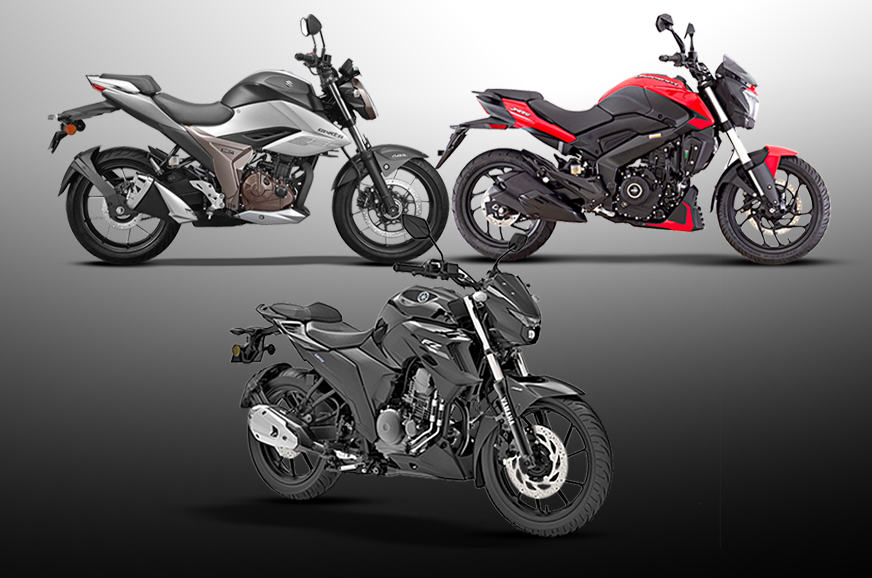
A couple of days ago, Yamaha finally revealed prices for the BS6-compliant FZ 25 and newly-introduced FZS 25. The bike has witnessed a substantial Rs 15,000 hike in price with the transition to BS6, putting it on par with other quarter-litre nakeds like the Bajaj Dominar 250 and the Suzuki Gixxer 250. Here’s how the three stack up against each other on paper.
Powertrain
The Bajaj Dominar 250 is the most powerful bike here, but by an almost negligible margin over the Suzuki Gixxer 250. It borrows its 248.8cc engine from the 250 Duke but considering that the bike hasn’t been designed to be as performance-oriented as the KTM, it makes less peak power and torque – 27hp at 8,500rpm and 23.5Nm at 6,500rpm. The higher-revving Gixxer 250, meanwhile, makes 26.5hp at 9,300rpm and 22.2Nm at 7,300rpm. However, with a kerb weight of 184kg, the Dominar 250 is a substantial 24kg heavier than the Gixxer 250 and you can take a look at how the power-to-weight ratios differ in the table below.
On the other hand, the FZ 25 is the least powerful motorcycle here and it uses an air-cooled engine. It also happens to be the lightest bike here, but only by a small margin. And so, its power-to-weight ratio is considerably lower than its competition.
The Yamaha is also the only motorcycle here to use a 5-speed gearbox - the Suzuki and Bajaj use a 6-speed unit.
| Powertrain | |||
| Bajaj Dominar 250 | Suzuki Gixxer 250 | Yamaha FZ 25 | |
| Engine | 248.8cc single-cylinder, liquid-cooled | 249cc single-cylinder, oil-cooled | 249cc single-cylinder, air-cooled |
| Power | 27hp at 8500rpm | 26.5hp at 9300rpm | 20.8hp at 8000rpm |
| Torque | 23.5Nm at 6500rpm | 22.2Nm at 7300rpm | 20.1Nm at 6000rpm |
| Power-to-weight ratio | 150hp/tonne | 169.87hp/tonne | 135.94hp/tonne |
Underpinnings
Here’s where the most dissimilarities lie. The Dominar 250 is the only bike here that uses a USD fork, while the other two come with conventional telescopic units. All three, meanwhile, feature a monoshock. Interestingly, the Dominar uses the slimmest tyres of the lot. The front tyre is the same spec as that of the FZ 25’s, but the latter has a wider rear tyre. The tyres on the Gixxer 250 are the widest and it’s also the only bike here to come equipped with radial tyres. Meanwhile, the Dominar has the longest wheelbase, which will aid its stability.
With regards to the brakes, all three bikes use discs at either end, but the Dominar has the largest brake discs, which will be helpful considering that it is also the heaviest bike.
| Underpinnings | |||
| Bajaj Dominar 250 | Suzuki Gixxer 250 | ||
| Weight (kerb) | 180kg | 156kg | 153kg |
| Seat height | 800mm | 800mm | 795mm |
| Wheelbase | 1453mm | 1340mm | 1360mm |
| Brakes (f) | 300mm disc | Disc | 282mm disc |
| Brakes (r) | 230mm disc | Disc | 220mm disc |
| Suspension (f) | USD fork | Telescopic fork | Telescopic fork |
| Suspension (r) | Monoshock | Monoshock | Monoshock |
| Tyres (f) | 100/80 - 17 | 110/70 - R17 | 100/80 - 17 |
| Tyres (r) | 130/70 - 17 | 150/60 - R17 | 140/70 - 17 |
| Fuel capacity | 13 litres | 12 litres | 14 litres |
Design and features
Buyers of the Dominar 250 will benefit from the fact that the little Dominar shares nearly all its design aspects with the ‘larger’ Dominar 400, which has always boasted of a strong on-road presence. The body panels are the same, and so is the powerful LED headlight. It also uses a similar split-instrument cluster setup with a primary handlebar mounted display and a secondary unit on the fuel tank. However, Bajaj has skimped on the amount of information it displays and it misses out on some basic information like a gear position indicator, average fuel consumption or a distance-to-empty readout. Nevertheless, it is the most feature-packed offering in this lot. Despite its more relaxed, touring-focused intentions, Bajaj hasn’t skimped on the bike’s features and it gets a slipper clutch, which is unique in this company. All three bikes feature dual-channel ABS as well.
The Gixxer 250 is Suzuki’s first quarter-litre platform in our country after a long time and its design is based on the smaller Gixxer 155. It’s a rather simple yet sharp design and the two matte finish colour schemes that the bike is available in are a lot more subtle than that of the previous-gen Gixxers. The bike also gets a quirky looking headlight, an interesting wheel design and a bronze-coloured mid-section, all of which make it stand out. Overall, the Gixxer 250 is a muscular, good-looking motorcycle and the fact that the handlebar, tank and tail lie on the same plane gives it a great stance.
Along with the BS6 FZ 25, Yamaha also introduced a new FZS 25. The biggest change in comparison to the outgoing model is the addition of a new headlight that we hope offers better performance than the one on the BS4 bike. Yamaha is also offering it with a few new colour schemes (two of which feature golden-coloured alloy wheels), a new side-stand-down engine inhibitor, redesigned instrument cluster and a belly pan. Additionally, the FZS 25 gets a taller windscreen, knuckle guards and gold wheels, although this takes the price to just Rs 3,000 less than the Bajaj.
Summing it up
| Price | |||
| Bajaj Dominar 250 | Suzuki Gixxer 250 | Yamaha FZ 25/FZS 25 | |
| Price (ex-showroom, Delhi) | Rs 1.6 lakh | Rs 1.65 lakh | Rs 1.52 /1.57 lakh |
On paper, the bikes have their own pros and cons. The Yamaha lacks the performance to match its competition but is the most affordable option here, albeit by a much smaller margin than before. The Gixxer 250 has the advantage of being much lighter than the Dominar and will most likely be on par with it, in terms of performance, out in the real world. However, the Bajaj does boast of more features and also costs Rs 5,000 less than the BS6 Gixxer 250.
Of the lot, the new Dominar 250 is the only one we’ve had the opportunity to ride, and you can click here to read our review. We’ll know which bike comes out on top in the real world, once we’ve gotten our hands on the other two.
from Autocar India - Bikes https://ift.tt/3jP5hZy
Subscribe to:
Posts (Atom)